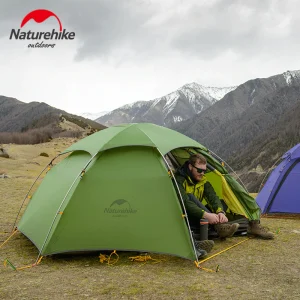
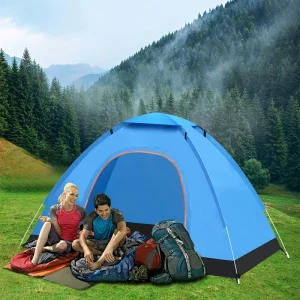
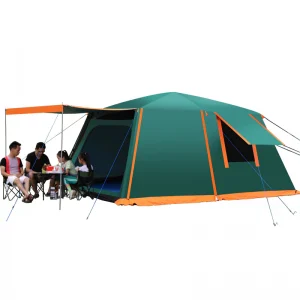
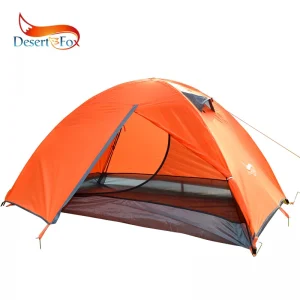
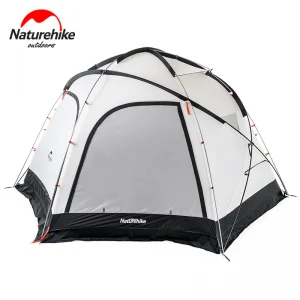
Many friends confuse outdoor tents with camping tents, but they are different in life. Let me help you analyze the difference between them:
Outdoor tent
Outdoor tent use: used for short-term residential use in the wild for outdoor activities and camping.
Outdoor tent structure:
1.Fabric
The technical indicators of waterproof fabrics are subject to the degree of waterproofing.
Water repellent is only coated with AC or PU on the exterior. Generally only used for children or game accounts.
Waterproof 300MM is generally used for beach tents/shade tents or cotton tents for drought and less rain.
Waterproof 800MM-1200MM for conventional simple camping tents.
Waterproof 1500MM-2000MM is used to mid-range tents and can travel for many days.
Waterproof above 3000MM is generally a professional tent, which has been treated with technologies such as high temperature resistance/cold resistance.
Bottom material: PE is generally the most common, and the quality mainly depends on its thickness and density of warp and weft. The high-end tents use Oxford fabrics, and the waterproof treatment should be at least 1500MM or more.
Internal fabric: usually breathable nylon or breathable cotton. Quality depends mainly on its density.
2.Supporting skeleton: the most common is fiberglass tube. It is more professional and important to measure its quality.
3.Features: Outdoor tents should belong to collective equipment, owned by people who often participate in outdoor activities and often have actual needs. Newcomers can participate in some activities, and then purchase according to your own needs after having a certain experience. The purchase of tents is mainly based on the purpose, design, material, wind resistance, and then considering the capacity (how many people can sleep), weight and so on. Ordinary camping tents are mostly yurt-style, with 2-3 carbon fiber tent poles, which provide better rainproof performance, certain windproof performance, and better air permeability. Most of the four-season tents or alpine tents are tunnel-type tents, with more than 3 aluminum alloy tent poles, and there are many auxiliary designs such as ground nails and windproof ropes, and the selection of materials is strong and durable.
But many alpine tents are not rainproof, and are often too heavy for weekend outdoor traversal (except in extreme winter conditions). The climatic conditions of spring, summer and autumn in the surrounding areas of Beijing are not too complicated, and the main characteristics of winter are high cold and strong wind.
Camping Tent
1.Classification of camping tents: Structurally, camping tents are mainly triangular (also called herringbone type), dome-shaped (also called yurt type) and house-shaped (also called family type). In terms of structure, it can be divided into single-layer structure, double-layer structure and composite structure, and in terms of space size, it can be divided into two-person, three-person and multi-person types. Triangular camping tents are mostly double-layer structures, which are more complicated to support, and have better wind resistance, thermal insulation, and rain resistance. They are suitable for mountaineering adventure. The dome-shaped camping tent is easy to set up and carry, light in weight, and suitable for general leisure travel.
2.When purchasing camping tents, you should pay attention to: The general outing is based on the principles of lightness, easy construction and low price, mainly in the shape of a dome, weighing about 2 kilograms, and mostly in single layers. Its waterproof, wind resistance, warmth and other properties are secondary, suitable for general small family travel.
3.Features of camping tents
Mountaineering travel: First of all, it must have certain waterproof, rain-proof, wind-resistant and warm-keeping properties, and secondly, it is the price, lightness and support method. Mainly with double-layer triangle, weighing 3-5 kg, suitable for a wide range of mountain camping and four-season travel.
Mountaineering adventure: The first thing to consider is the performance of warmth, wind resistance, carrying and support, and the second is the price factor. This kind of tent has good performance, but it is also expensive, and its weight is less than 5 kilograms, which is suitable for use in relatively harsh natural conditions.
There are also other tents for adapting to the needs and use of various environments, such as fishing tents, semi-reunion type, for shade, and temporary rest. Awning, a sunshade tool for general travel.
4.When setting up tents in the wild, if you are not familiar with how to set up or have insufficient parts, you will not be able to enjoy the outdoor life. So before you set off, practice at home and check whether the parts are enough. It is best to bring a few more pieces. In addition to large house-shaped tents, most tents can be set up by oneself. After practicing, apply waterproofing agent on the outer layer of the tent to prevent rainwater from leaking through the seam.