Choosing the right camping equipment is crucial for camping in high-altitude areas, especially in environments like Tibet where there is a large temperature difference between day and night. Here are some tips to help you choose the three important camping equipment, tents, sleeping bags, and mattresses, and understand some of the indicators and parameters inside.
Tent selection:
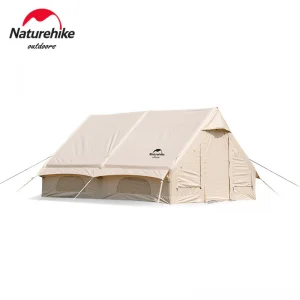
Going to cold and high altitude areas, tents are necessary for all seasons. To choose the right camping tent, you need to look at three indicators: the first is the external tent, with a tear resistance index greater than or equal to 20D and 200T, and a static rain resistance index greater than or equal to 1500mm. Secondly, looking at the internal ledger, the tear resistance index is greater than or equal to 50D and 170T, and the static rain resistance index is greater than or equal to 3000mm. The third thing to look at is the tent pole. The diameter of the aluminum pole should be at least 8mm, which meets the above three indicators and is basically considered a qualified camping tent. The higher the index, the better. However, it is important to pay attention to weight. However, for top tier tents like the BA Spurs, the outer tent is only 1200mm waterproof. Why? Ordinary heavy rain or rainstorm is not a continuous water column, but it carries the impact of raindrops falling from high altitude, so there is also a large water pressure. Experiments show that the impact of rainstorm on the tent is equivalent to the water pressure of 800 mm, so if the rain proof coefficient of more than 1000 is really achieved, there is no fear of big storms.

Selection of sleeping bags:
If you want to go camping in high-altitude areas, don’t trust things like electric heaters and mats too much. If something goes wrong, you won’t be safe. The filling materials of sleeping bags are generally divided into synthetic fiber and down. Under the same unit weight, down has better warmth retention and compression performance, but it is afraid of moisture and more expensive. Artificial synthetic fiber has poor thermal insulation and compression performance, but it can retain most of the thermal insulation capacity when wet, and it is cheap.
Sleeping bags all have temperature scales, and on the premise of not making false labels, it only makes sense to look at the comfortable temperature scale. The extreme temperature scale only means to ensure no frostbite and does not have any practicality. The underlying logic behind the temperature scale also has two important indicators, one is the fiber content. The higher the fiber content ratio, the better the fluffiness, and the better the thermal insulation performance per unit weight.
Another factor is the filling capacity: the more padding there is in a sleeping bag, the better its warmth retention performance. The method of choosing a good sleeping bag is simple. A sleeping bag that looks full and plump can be grasped with one hand, and the less stuff left in the hand, the higher the filling capacity of the sleeping bag.
The choice of a sleeping mat that is often overlooked:
The importance of a sleeping mat is often overlooked. The insulation capacity of a sleeping bag is directly proportional to its expansion volume, so once compressed, the down sleeping bag will almost lose its insulation capacity under the body, meaning that all heat will be lost from below. Therefore, choosing a good sleeping mat is also crucial.
The materials, forms, and categories of sleeping mats are very diverse, but professional high and cold level sleeping mats will be labeled with a heat transfer obstruction coefficient, also known as the R value. When the R value reaches six or more, it can withstand temperatures below minus ten degrees Celsius. The top-notch lightweight sleeping mat, after compression, has a smaller volume than a hot water bottle, but the R-value can reach 9. It is filled with down inside and can be used directly on permafrost or ice and snow at temperatures below -30 degrees Celsius, without feeling cold. Of course, the price is relatively expensive.
It should be noted that the Intex inflatable mattress, which is often seen by the seaside, has suffered losses for many people in cold areas. Although it is very thick, the insulation capacity of this sleeping mat is almost zero because the interior is completely filled with air, which can transmit heat through convection. Therefore, it cannot be used in cold areas at all.
The three main equipment in camping equipment, including tents, sleeping bags, and sleeping mats, should not be chosen carelessly, especially when camping in high-altitude and cold areas for the night. I hope this article can help everyone.