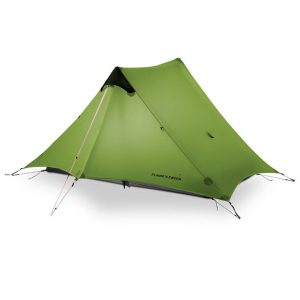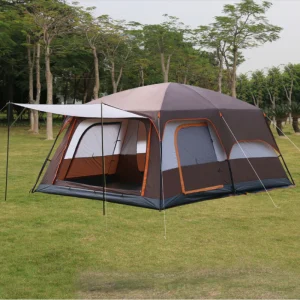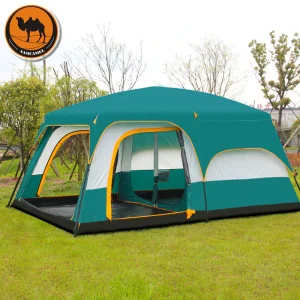
Setting up a tent isn’t difficult, but that doesn’t mean it can be done flawlessly every time. In most cases (like the tent bottom is not paved) this is nothing. But if rain or high winds are forecast, your tent will be put to the test. If the inner and outer tents do not fit neatly, they will touch each other and rainwater may seep into the inner tent. If the support ropes and tent corners are not taut, the tent may sway in strong winds or even be blown over.
How can these problems be avoided?
1.In addition to cleaning the dust and attachments in time after use, the tent should also wipe off the moisture on both sides of the fabric, and then fold it for storage after it is completely dry. This point is very important. If it is stored before it is completely dry, it is easy to make the fabric mildew and adhesion problems, which will affect the service life of the tent!
2.After the tent is completely dry, folded, and stored, try not to put other items on the tent, to avoid permanent fatigue at the bend of the waterproof tape material and degumming. My suggestion is to find a cardboard box specifically for tent storage. I think many friends have more than one tent, so special storage is also conducive to the comprehensive storage of equipment.
3.Regularly or irregularly take the tent out to dry for half a day, and avoid direct sunlight. The advantage of this is that it can prevent mildew and adhesion of the tent fabric, and it can also prevent the waterproof rubber strip at the bend of the tent from causing permanent fatigue, extending the overall service life of the tent.
4.After the tent is cleaned, it is not advisable to use the original storage bag for compression storage.
5.The outer tent of the mountain tent is not flattened, resulting in a gap between the bottom of the outer tent and the ground, which is prone to problems in strong winds or heavy rain. The adjustment method is to tighten the adjustment belt, adjust the height of the outer tent, tighten the outer tent, and reduce the distance from the ground.
6.An uneven or wrinkled bottom means that the tent is not fully flattened. If it’s a light tent, this makes it smaller, and it also means that the tent is not fully stable. The adjustment method is to adjust the two connecting straps on the opposite corners and tighten the support rod.
7.The problem with asymmetric support rods is that the tent is not straightened, the outer tent is wrinkled, and the width of the tent is not normal. The adjustment method is to adjust the connecting belt where the support rod sleeve is located so that the support point of the central support rod is in a straight line with the two sides. These straps control the width of the tent, and by tightening the straps, you can maximize the tent’s width.
This is the introduction to tent building knowledge, I hope it can help you. If you want to know more about tents, please read other articles on this site, thank you for reading!